
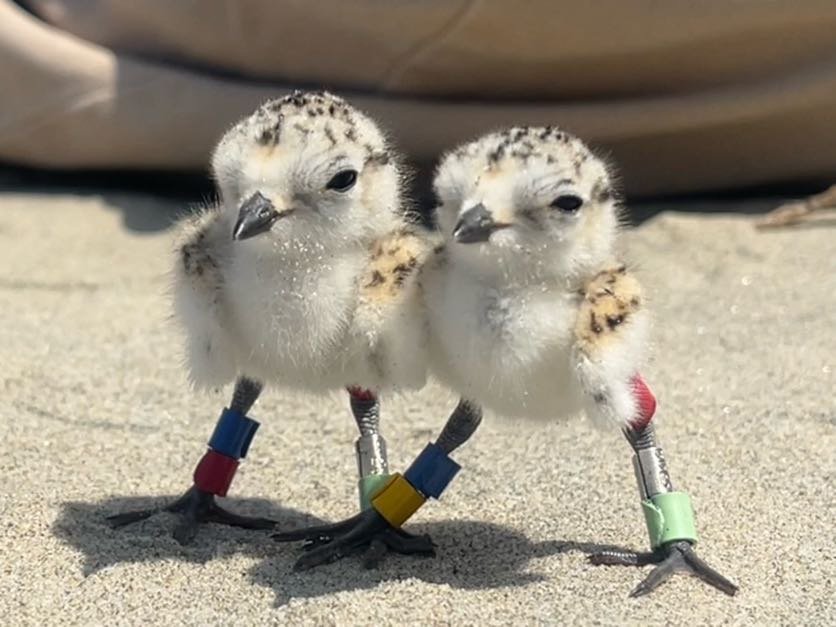
Saving Mexico’s Imperiled Beach-Nesting Birds
The Snowy Plover and the Least Tern
In Todos Santos Bay, Pronatura Noroeste realizes protection measures for shorebirds with the support of the Manfred-Hermsen-Stiftung.
Background

Todos Santos Bay is a Western Hemisphere Shorebird Reserve Network (WHSRN) site of regional significance, and Estero de Punta Banda, within the bay, is a Ramsar Wetland of International Importance. It is home to some of the last breeding populations of Snowy Plovers (Anarhynchus nivosus) and Least Terns (Sternula antillarum browni) in Mexico, with national estimates of approximately 2,646 and 4,000 breeding pairs, respectively.
The breeding season of Snowy Plovers and Least Terns overlaps with summer, when human activity on local beaches peaks. Both species face threats from coastal development, off-road vehicles, human disturbance, off-leash dogs, invasive species, and climate change.
The Project
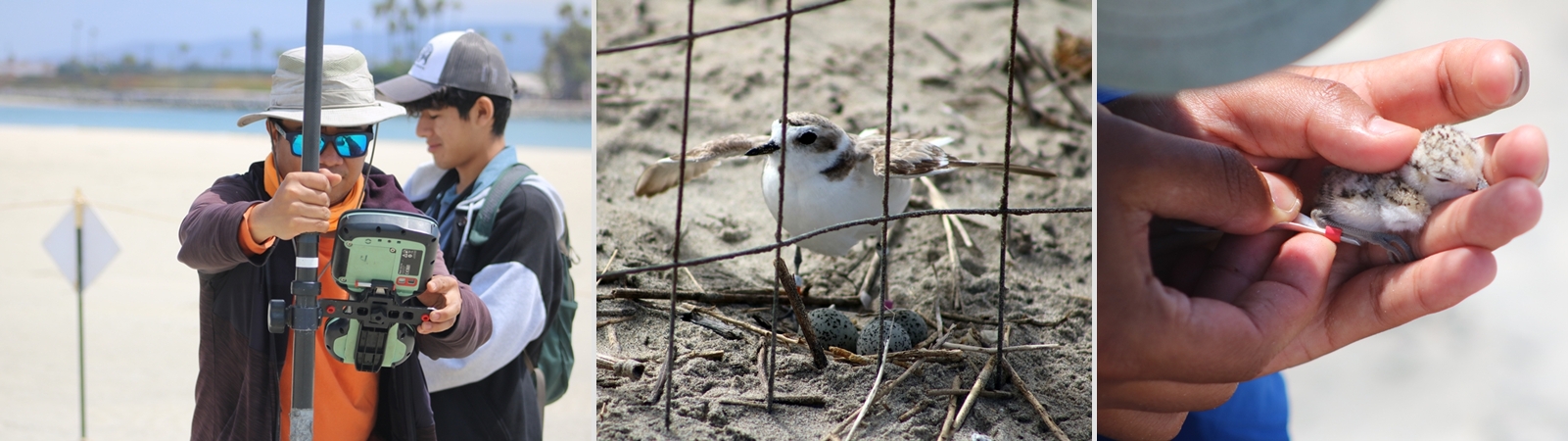
In 2026, our project partners Pronatura Noroeste, Pro Esteros, and others, advanced the Todos Santos Bay Conservation Action Plan through nest protection, scientific monitoring, beach stewardship, and community engagement. Together, they protected 57 Snowy Plover and Least Tern nests across two beaches. They also installed more than 14 protective nest enclosures and used sandbag barriers to protect nests threatened by high tides. A beach steward-group patrolled daily to identify threats and guide visitors. Of all nests protected by these barriers, the clutches successfully hatched.
A major public policy milestone was the official declaration of Municipal Snowy Plover and Least Tern Day in collaboration with Ensenada’s City Council. Pronatura Noroeste and its partners celebrated this day with the council and more than 500 community members, strengthening public awareness and municipal commitment to protecting these birds and their coastal habitat. Additionally, 26 environmental education and community events reached more than 700 participants.

According to Pronatura Noroeste, these efforts contributed to 51 successful nests and 102 newly hatched chicks across both species. For Snowy Plovers, the numbers of successful nests and newly hatched chicks nearly doubled compared with 2025. Overall, 71% of Least Tern nests and 83.3% of Snowy Plover nests hatched successfully. Pronatura Noroeste also banded 78 chicks and documented the return of approximately six birds hatched in 2025 that successfully nested this year. Their return highlights the value of sustained conservation efforts to help new generations survive and breed on Ensenada’s beaches.